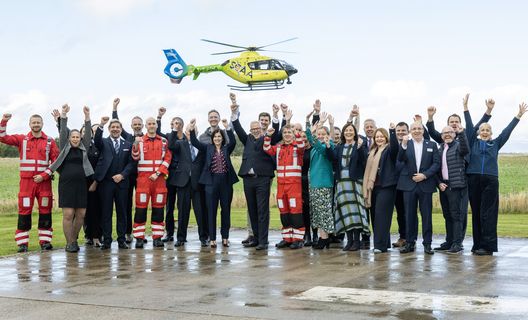
Rich Garside, joint lead paramedic with Helimed 76, takes us through a shift as a SCAA paramedic.
7.30 My shift starts.
I arrive at base and help the pilot get the aircraft out the hangar and prepare our rapid response vehicle. We check over our medical equipment and supplies to make sure we’re ready to respond to any urgent call outs.
8:00 - Morning Brief.
The pilot leads the morning brief where we review the weather, any restrictions in the country and any other relevant information that could impact our operations.

9:25 - Our first call comes in.
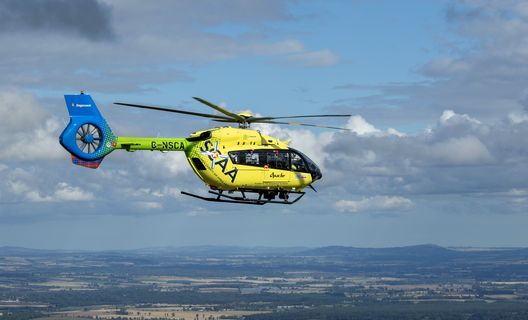
A call for help comes in – someone has fallen seriously ill at home. Within minutes, we’re on our way. I’m acting as a Technical Crew Member (TCM) for this shift, so I sit in the front left seat of the helicopter and support our pilot with tasks like landing site selection and communication.

11:17 - Return to base.
We stabilise the patient and get them to the hospital best suited to the care they need. Once the patient has been handed over to the clinical team, we return to base. We restock equipment we’ve used, refuel the aircraft and complete our records and debrief as a team – ready to respond to the next call.
13:26 - Preparing for the next patient.
We have a dedicated training area at the base that allows us to keep our clinical skills sharp between missions. Today, we run through cardiac arrest scenarios, rehearsing complex decision-making and procedures. This helps ensure we’re even more prepared on that kind of mission.

15:06 - Another call comes in.
There has been a serious car accident. An ambulance is at the scene, but fellow paramedics quickly determined that one patient’s condition is critical and that there is a need to quickly get the patient to definitive care. We can save precious time and are in the air in minutes.
15:35 - Working with other emergency services.
At the scene, we work with colleagues from the Ambulance Service, Police and Fire and Rescue Service to assess the situation, make the scene safe and ensure the patient receives the best possible care before transferring them to hospital.

16:10 - Hospital handover.
We arrive at the hospital and provide the receiving clinical team with a handover. The time saved travelling by air is crucial. The helicopter helps reduce transport times and can enable direct access to specialist services, which for a patient in urgent need can be the difference between life and death. We head back to base.
19:30 - End of shift.
As a team, we’ll put away the aircraft and rapid response vehicle and start tidying things up. As a crew we’ll check in on each other and have a debrief before heading home.
No two days are the same but it’s so rewarding to know that in someone’s worst moments, we were there to help.