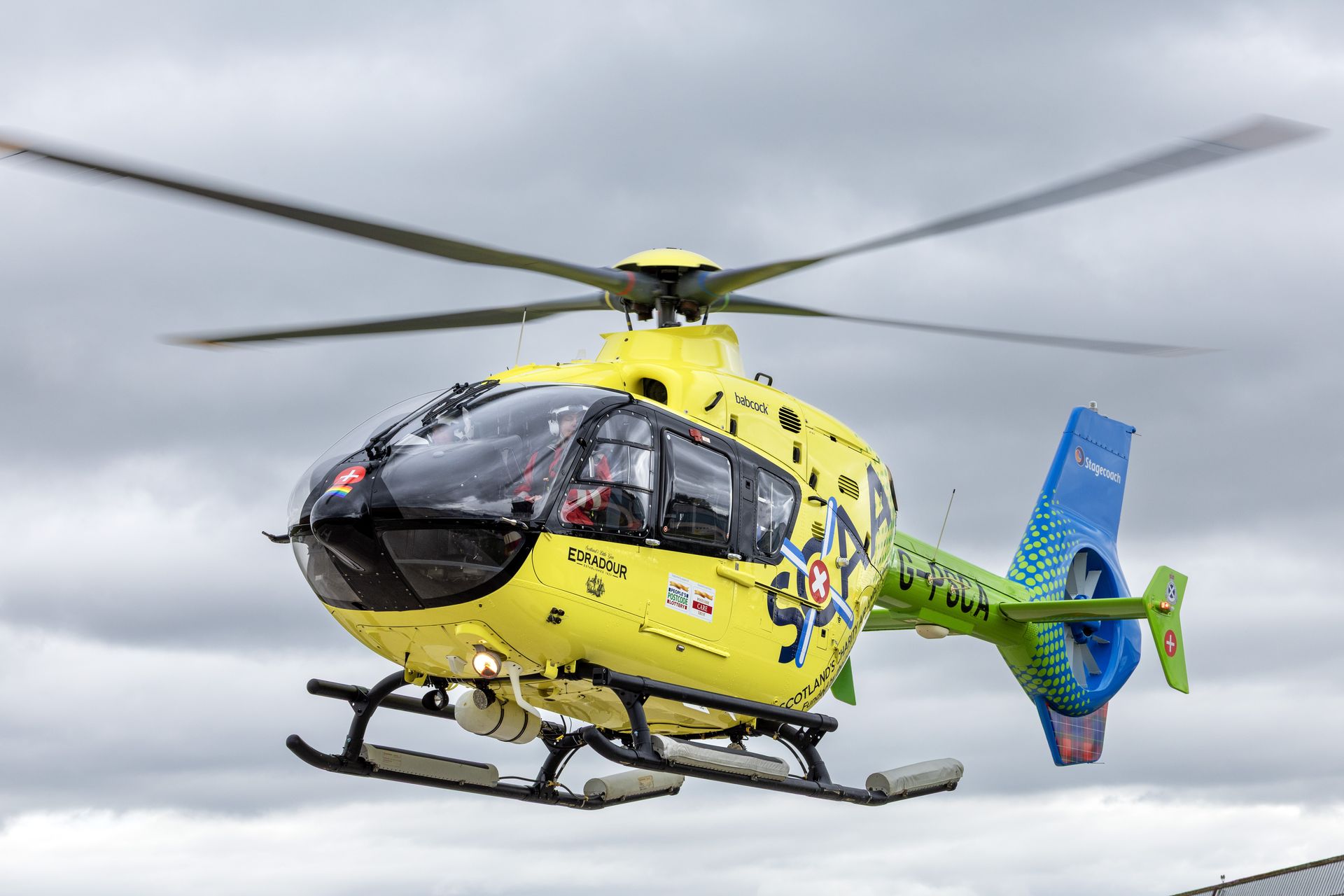
Our air ambulances provide a vital lifeline across Scotland. Our crews’ ability to fly quickly and safely to help a patient can often be the difference between life and death. There are many challenges with any life-saving mission, and unfortunately laser pointers and high-powered torches can cause significant unwanted distractions.
A laser beam or torch might seem harmless, perhaps even a toy, but when directed at an aircraft, it can temporarily blind a pilot or damaging their vision. In the UK, this problem has escalated in recent years. According to the Civil Aviation Authority (CAA), there are hundreds of laser incidents reported every year, with air ambulances among the most frequent targets because they fly lower and slower than commercial airliners.
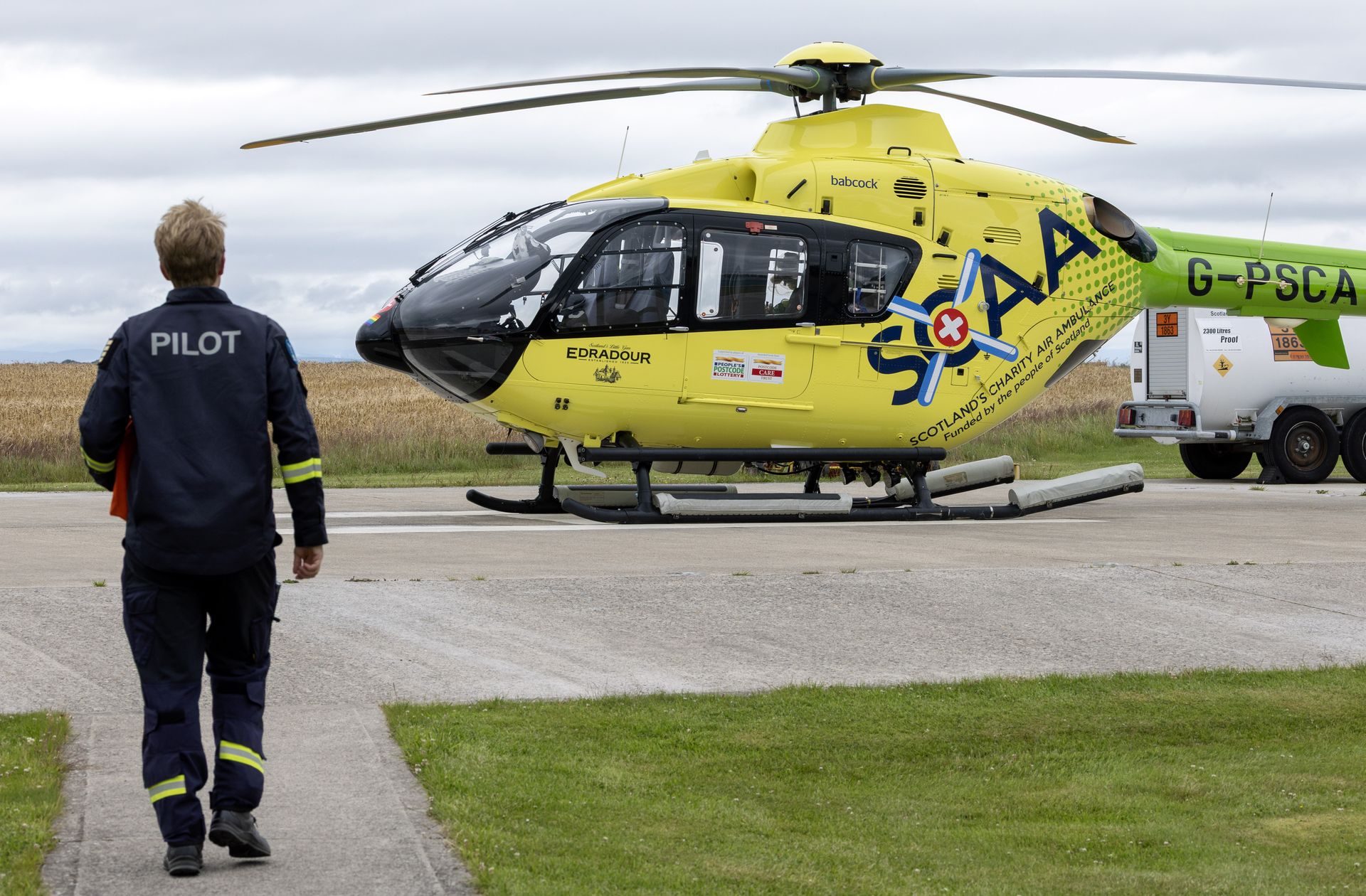
For air ambulance pilots, who fly at night and at low altitudes to reach patients quickly, even a brief flash of light can be an issue. When a laser strikes the cockpit, it can cause “flash blindness” - an intense glare that can temporarily overwhelm the pilot’s vision.
“The impact of a laser or a bright beam of light on a pilot’s vison can’t be overstated”, said SCAA pilot Peter Amstutz, “Not only can it be incredibly disorientating, but it also risks permanent physical harm to the crew and is likely to result in rejection of the landing site, with potentially catastrophic results for the patient.
“Occasionally, the illumination is well-intentioned, aiming to attract attention or guide the crew. Please refrain from shining any light at the helicopter but instead illuminate the ground in front of you – that is much more useful.”

The green lasers commonly sold online are the most distracting, as the human eye is more sensitive to green light. These beams can reach aircraft thousands of feet away and cause not only temporary glare but could also cause long-term eye damage if exposure is prolonged. Some pilots have suffered retinal injuries or ongoing visual problems after laser attacks, with potentially career-ending consequences.
Beyond the physical effects, there is also a psychological toll. Pilots who have been targeted often describe heightened anxiety during night operations, fearing another strike that could endanger themselves, their crew, or the patient they are trying to airlift.
Under UK law, shining a laser at an aircraft is a criminal offence. The Laser Misuse (Vehicles) Act 2018 makes it illegal to dazzle or distract any person in control of a vehicle, including aircraft. Offenders can face up to five years in prison, an unlimited fine, or both. Despite this, laser incidents continue to occur across the country - often not out of malice, but ignorance of just how far and how powerfully the beam can travel.
The solution lies in a combination of enforcement and education. Public awareness campaigns by the CAA and air ambulance charities have stressed that lasers are not toys and can have life-threatening consequences. Retail restrictions on high-powered devices and better public reporting systems can also help reduce the threat.
Every air ambulance flight represents someone’s worst day - a child injured in a road collision, a heart attack in a remote village, a worker hurt on a building site. When trying to help these people, please always think – our crews need to be able to focus on the mission to save a life.