Our air ambulance paramedics operate in one of the most complex and hazardous environments in healthcare. Unlike hospital or ground ambulance settings, their workplace includes aircraft bases, helicopter cabins, landing zones, roadside scenes, rooftops, and remote terrain. Helmets are a critical piece of personal protective equipment that help keep our paramedics safe while allowing them to deliver critical life-saving care.
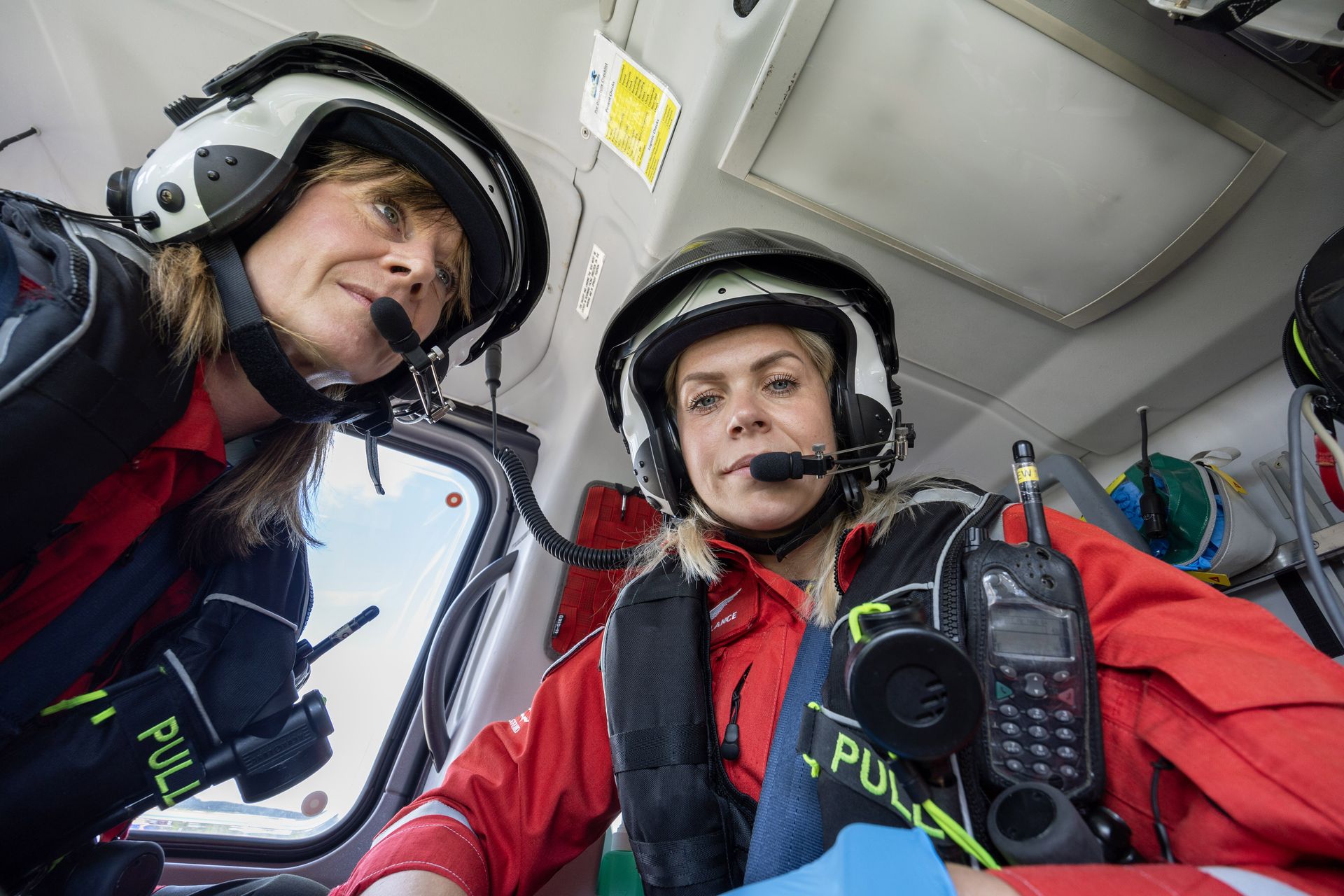
When on board and around the air ambulance, our paramedics wear a flight helmets which have a lightweight, modular design that can easily be adapted for different situations. The helmets offers vital head protection when approaching, disembarking and working around our helicopters, especially when the rotors are active. Our helmets also include high-visibility markings, making crew members more visible to pilots, ground personnel and other medical teams on scene.
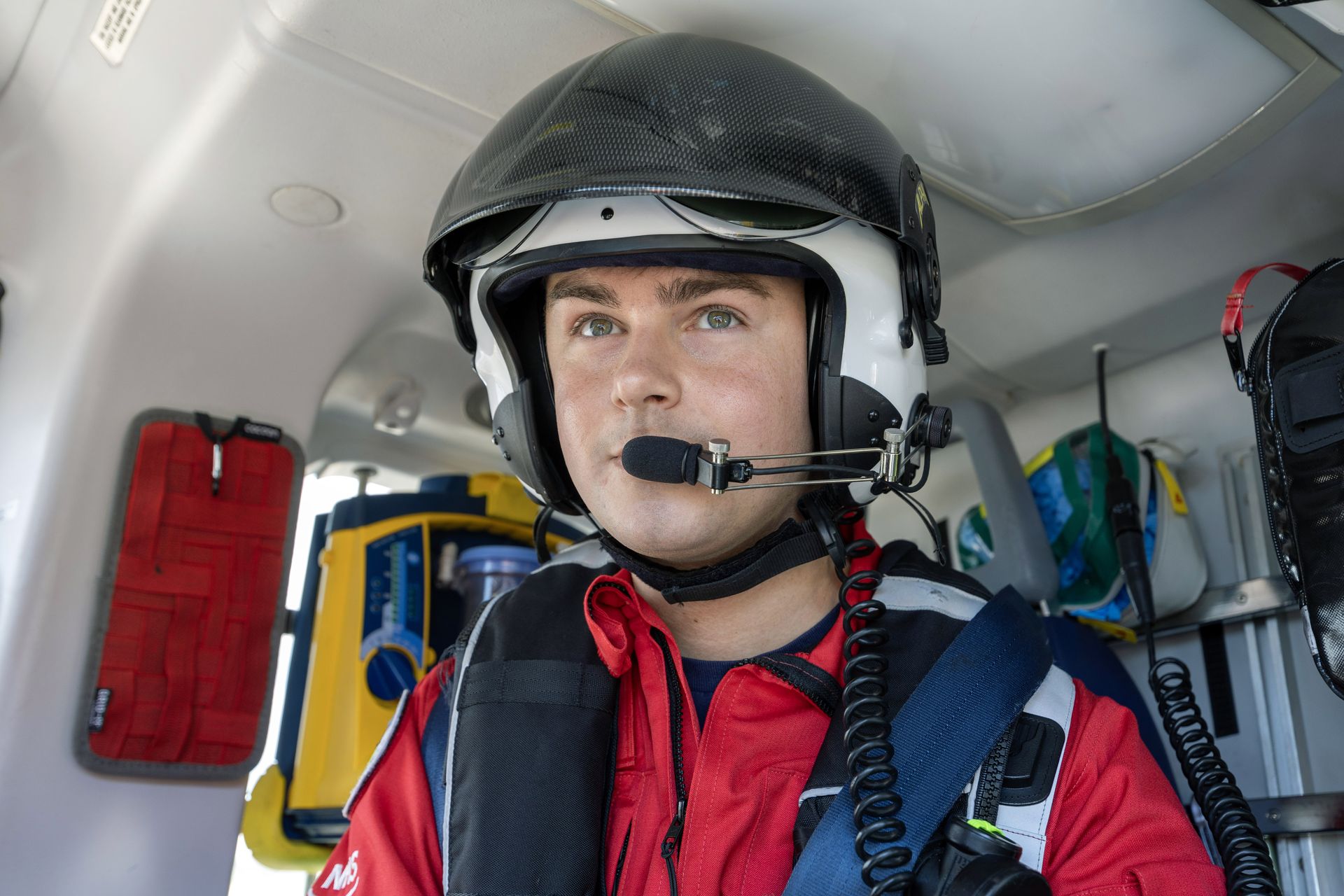
Helmets also offer protection when working inside our aircraft to access medical equipment, often requiring crouching and maneuvering in tight spaces, including when unloading or loading a patient onto the helicopter.
In addition to impact protection, air ambulance flight helmets are designed to integrate essential communication and sensory equipment. Built-in headsets protect hearing from constant high-decibel rotor noise while allowing clear communication between crew members, pilots and patients who can wear a headset when on board. Our helmets include visors which allow for rapid adaptation to changing light conditions and also support night vision goggles which greatly improve situational awareness during night operations and poor visibility conditions.
Our aircraft also carries safety helmets that can be used on scene by paramedics when away from the helicopter. Paramedics may land on motorways, fields, mountainsides, or confined urban spaces. These environments often contain uneven ground, debris, low-hanging obstacles, livestock or even moving vehicles. A safety helmet reduces the risk of serious head injury from slips, falls, or being struck by objects.
Helmets are an essential tool that keep our crews safe and protected so they can reach patients who are ill or injured as quickly as possible and deliver vital care.