When an air ambulance is hovering above your area, it can be both alarming and fascinating to witness. Scotland’s Charity Air Ambulance plays a crucial role in emergency medical response, providing expert care and rapid transport for patients who need urgent help. However, when one of our helicopters appears overhead, it’s important to stay calm and know what actions to take to ensure your safety - and to help our crew do their job effectively.

1. Stay calm and assess the situation
The first thing to remember is not to panic. Our air ambulances are deployed in serious situations - such as road accidents and medical emergencies - but our presence doesn’t necessarily mean there’s an immediate risk for you. Take a moment to observe from a safe distance and avoid speculation about what’s happening.
2. Keep a safe distance
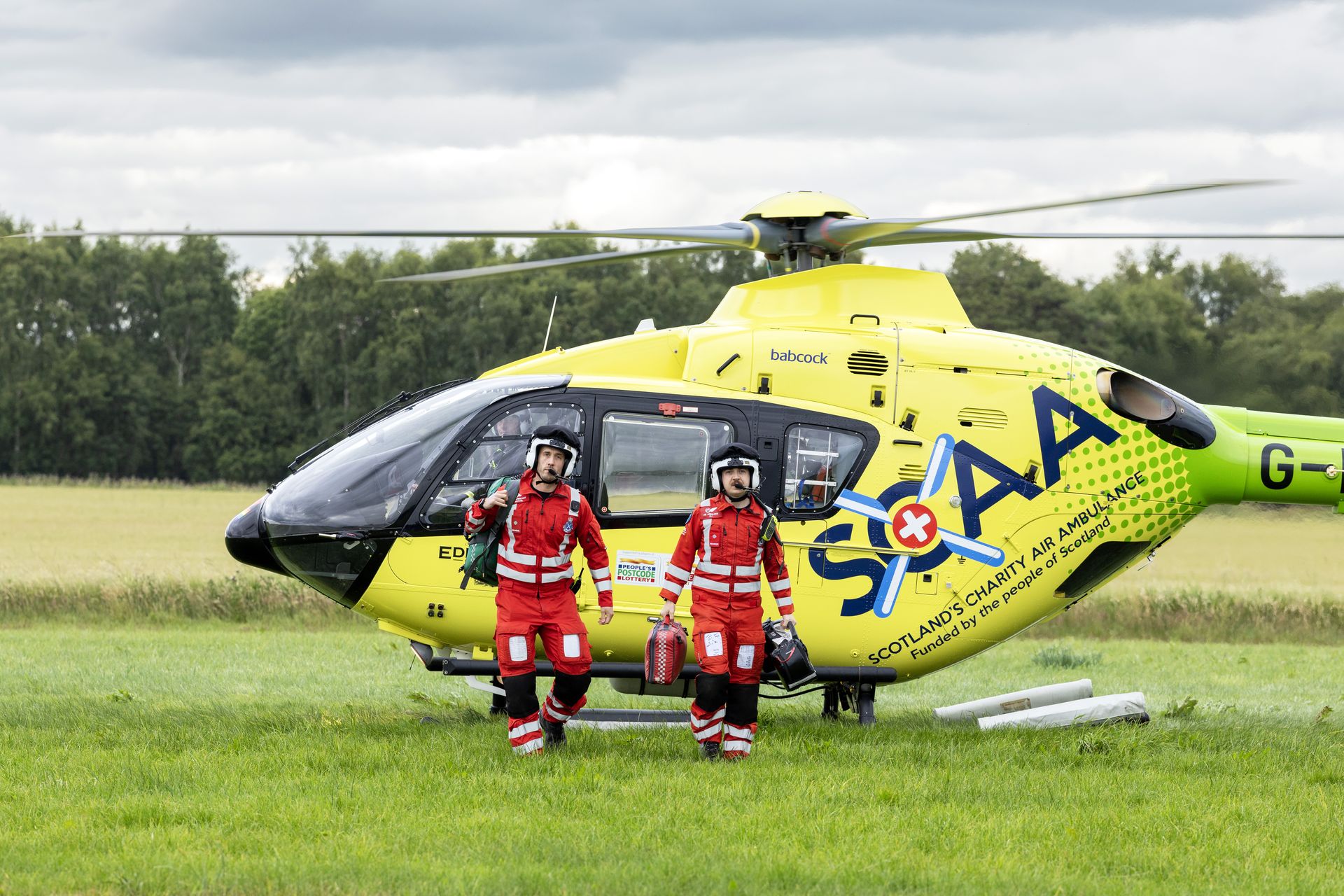
If the helicopter appears to be hovering, the crew is most likely looking for a suitable place to land and it is essential to give the helicopter plenty of space. Helicopters need a clear, flat area to land safely, free from people, vehicles, and debris. The downwash from the rotors creates powerful winds that can send loose objects flying and make it difficult to stand or see clearly. As a rule of thumb, stay at least 100 meters (about the length of a football field) away from the landing zone unless directed otherwise by emergency personnel. Never approach the aircraft, even after it has landed, as the pilot and medical crew may still be coordinating with ground responders or preparing to take off again quickly.
3. Follow instructions from emergency services
If police, firefighters, or paramedics are on the scene, follow their directions carefully. They may ask you to move your vehicle, clear a pathway, or remain behind a safety cordon. Their priority is to create a secure area so that the helicopter can land, load a patient, and depart efficiently. Cooperation helps save time - and potentially a life.
4. Help create access if needed
In some rural or residential areas, emergency crews may need to access private property or clear routes for the helicopter’s landing zone. If you’re asked for assistance - such as opening a gate or moving a vehicle - cooperate promptly. Every second counts in a medical emergency.

5. Show respect and empathy
Remember that an air ambulance is responding to someone in distress. Taking photos or video of our helicopter from a safe distance is fine, but you should avoid recording anything that includes a patient. Keeping noise and interference to a minimum allows the medical team to focus entirely on their patient.
Scotland’s Charity Air Ambulance brings expert paramedic care directly to where it’s needed most – and often airlifts patient on to urgent hospital care. By staying calm, keeping clear, and following emergency directions, you can help ensure our life-saving missions go smoothly and safely.