Adam was forced to stop at a motorbike event:
“I could feel my heart pounding and my chest thumping. I knew something wasn’t right…but I didn’t expect it to be what it was.”
Adam left his house that day for a fun day out on his motorbike with friends at Craiglash Quarry in Aberdeenshire, but events soon left him in desperate, urgent need of air ambulance support.
The 52-year-old offshore ROV pilot was attending a motorbike enduro training day, when he began struggling to breathe and shaking uncontrollably.
“What I was doing shouldn’t have been making me feel the way it was,” he explains.
“I had suffered a cardiac arrest the previous year, and my life was saved. I wasn’t aware of it at the time, but the stent that was fitted either wasn’t fully inflated or there was a small gap between the stent and the artery wall that had caused a blood clot to build up.”
Also present at the event was an ScotSTAR Advanced Practitioner and former SCAA paramedic, Ewan Littlejohn, who was alerted to the incident and upon his arrival, began administering first aid to Adam within minutes.
“Adam appeared pale and clammy, and it was evident he was in considerable pain,” Ewan points out.
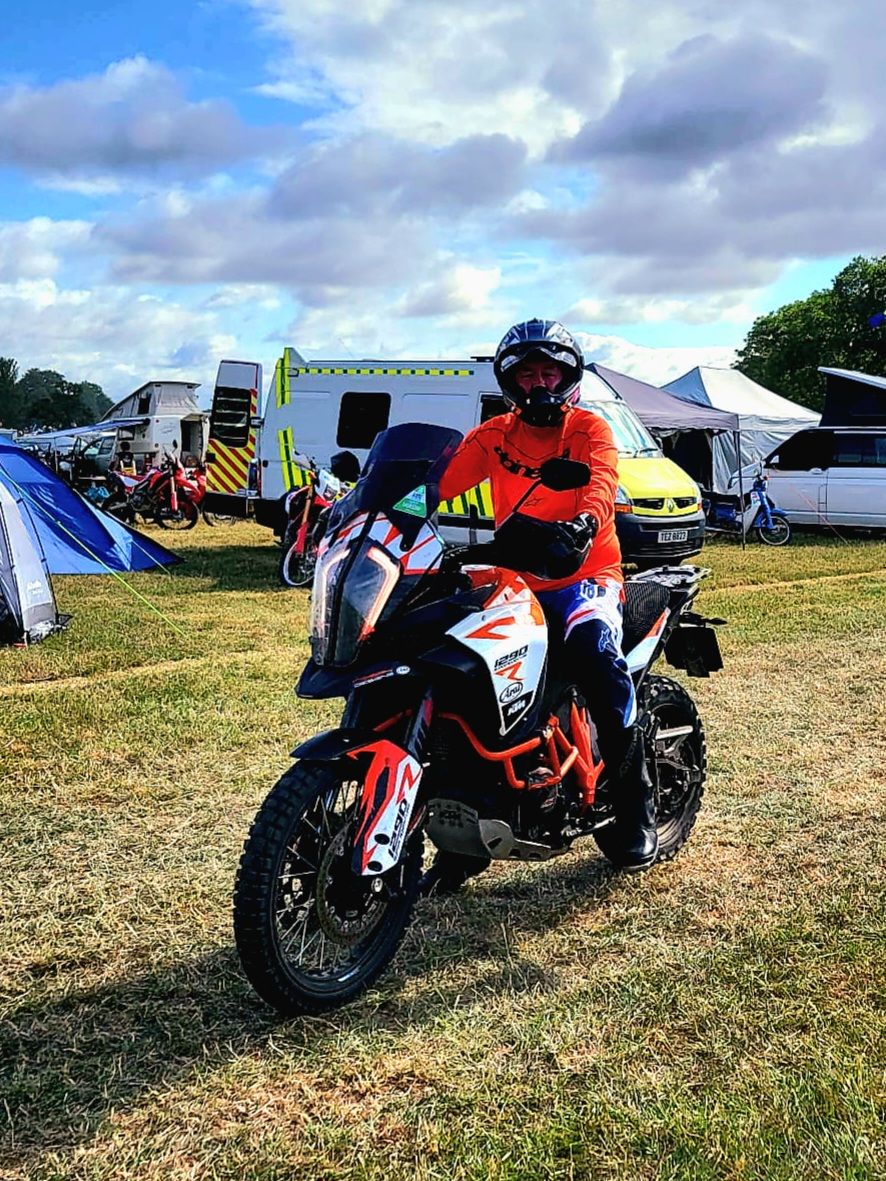
“He presented to me as experiencing a cardiac event, prompting me to act quickly. I initiated medical intervention and provided appropriate analgesia, along with other medications to support his care and stabilise his condition prior to the arrival of further assistance.
“Given the nature of the incident and the remote, rural location with challenging access, I requested air support to provide immediate care and ensure the timely transfer of Adam to Aberdeen Royal Infirmary for his cardiac intervention."
SCAA paramedics left from the charity’s Aberdeen base, also transferring a ScotSTAR Emergency Medical Retrieval Service (EMRS) trauma team, which consists of a consultant-led critical care response.
The crew landed at the same time a Scottish Ambulance Service road ambulance arrived.
“Up until the first medic arrived, I was very worried,” Adam reflects. “When I heard SCAA had been called, I was so relieved knowing I would get to hospital quicker.
“There was nothing I could really do with what was going on with me, I was in the hands of the medics. My condition was bad. I was a shaky mess – but the paramedics were doing an amazing job.
“The hardest part though was speaking to my wife on the phone, knowing she would have to tell my son, and putting them through that again.”

Paramedic Ewan stayed with Adam until the land ambulance escorted him out of the forest and up to the awaiting SCAA helicopter.
Adam was flown to Aberdeen Royal Infirmary in around 10 minutes, saving a lengthy road journey time of approximately 50 minutes.
“I remember all of it,” he comments. “The SCAA paramedics were able to put my mind at ease, they would communicate the next steps, flight time, and what was going to happen when we got to hospital.
“The professionalism was second to none – I couldn’t fault them.”
Once at hospital, Adam was rushed into surgery immediately and received the “relatively quick” procedure needed to clear his blockage. His life-threatening clot was removed, and his stent was inflated to avoid the issue recurring.
Thanks to donations from the Scottish public, SCAA was able to transport Adam into surgery in the fastest possible time. Ensuring his serious heart failure – due to the clot – was cleared before any permanent damage was done.
“It’s certainly plausible that I might not have made it if I didn’t get to
hospital in time,” he says.
“If Ewan hadn’t got to me so fast, or if the air ambulance and road ambulance hadn’t arrived when they did, I might not be here.
“That day could have turned out far worse.”
After four days in hospital, Adam was able to return home to be with his family in Forres.
Reflecting on his incident, Adam is full of admiration for the SCAA crew that flew to his aid.
He says: “To the SCAA paramedics; keep doing what you’re doing. You really are making a difference. Without SCAA there would be less of us here.”
Discover more patient stories
Kath's Story
When Kath signed up for the Scotland’s Charity Air Ambulance (SCAA) lottery, she couldn’t have known she would require our frontline service 10 years later following a road traffic collision.
Continue reading
Alma's Story
Black Isle couple Maru and Kenny faced their worst fears when their usually healthy and fun-loving 12-year-old daughter Alma was diagnosed with a spinal tumour.
Continue reading
Pamela's Story
Panic set in for Pamela when symptoms left her struggling to breathe while home alone.
Continue reading
Eilidh's Story
Eilidh, from North Uist, was 34 weeks into her third pregnancy when a routine midwife appointment at her local hospital revealed a worrying test result.
Continue reading
Mary-Jane's Story
Within minutes she was in a world of pain, terror and despair as she was crushed, dragged, tossed and trampled by a herd of cattle on the approach footpath to her first ascent.
Continue reading